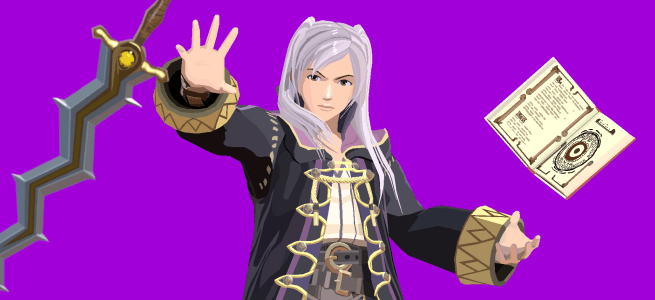
Robin is a very interesting character to play because they have a flaw that no other character has, that being item durability. True to the Fire Emblem series, Robin’s moves have a limited amount of uses before the item must be discarded and you have to wait several seconds before you get access to the move again. These moves are very powerful though and whether or not you have access to them changes the way you and your opponent will play the game.
Robin is also known as the tactician of Smash Bros and part of that is a chess motif. They even have a voiceline saying “Checkmate!” Unrelated to Smash Bros I have genuinely started getting into Chess lately. (Perhaps a canon event for anyone who continues playing Smash over the age of 25). On the surface Chess and Super Smash Bros don’t have a lot in common. One is a turn based strategy game that has been played for thousands of years and the other is a fast paced fighting game. But learning how tempo works in chess helped me to understand tempo in Smash Bros.

In Chess tempo is determined by the moves you make. A high tempo move is one that develops your piece and forces your opponent to respond to your threat. A good example of this is anytime you make a move that targets your opponents King. If you lose your King you lose the game and your opponent is literally forced to respond to your threat instead of developing another one of their pieces. Based on this concept of tempo it leads me to this definition.
Tempo is pressure that demands a response.
Pushing a Pawn to block an attack on the King isn’t as strong as sending a Knight to the center of the board, but failing to do so will cause you to lose the game. Tempo often happens in much smaller moments over the course of the game. Forcing a Bishop to retreat is great tempo, because it leads to your opponent moving the same piece multiple times without improving it’s positioning. But what does this have to do with Super Smash Brothers?
Everything! Unlike in Chess Smash Bros is real time which complicates things. But the idea behind tempo is still the same. Tempo is pressure that demands a response. In the case of Robin let’s look at charging Thunder. The thunder tome is a projectile that has several stages you can charge it to. The basic version of Thunder isn’t that impressive. But once you get it to stage 4 and can throw out a Thoron the move becomes very scary. Simply charging Thunder is pressure that demands a response.
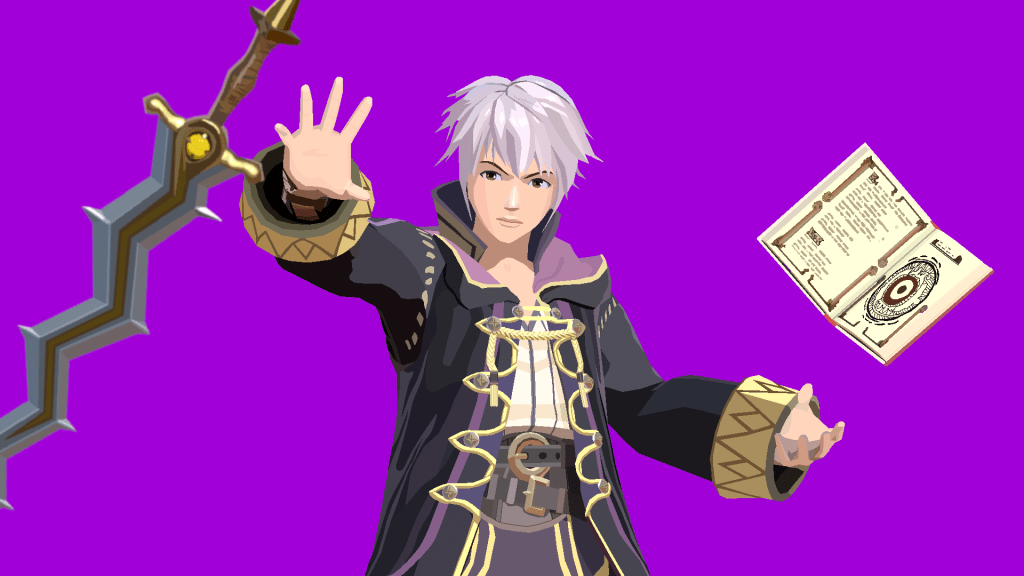
Typically this results in the opponent moving towards you to stop you from charging the tome. Charging the thunder tome on it’s own does not reward tempo, but correctly identifying how the opponent wants to respond to you charging the tome will lead to a positive tempo interaction.
If you know that your opponent is going to try to jump over the potential projectile that you are charging, you can counter their approach with a Levin Foward Air. The Levin Forward Air could then send them off-stage which gives you the opportunity to ledge trap with Arc Fire. An opponent on the ledge has very few options rewarding the tactician with tempo. One positive tempo interaction can often snowball into taking the stock.
Durability, however, throws a wrench in this gameplay loop. If you throw out an Elthunder and your opponent jumps in when you don’t have Levin Sword, the standard response of Forward Air isn’t going to work as well. Because Robin loses access to options throughout the match it’s even more important to understand tempo, because the inability to pressure can cause your opponent to react in different ways.
Something I didn’t truly appreciate until I mained Robin was that losing or gaining options during a match can significantly change the tempo of it. Robin has a tool for practically any situation but as soon as you’re put on a cooldown timer that gives your opponent an opportunity. If they know you don’t have Levin Sword it is a lot easier for them to apply pressure and force you to respond to their threats.
Tempo is relative to whatever options each player has.
Tempo applies to more than just whether or not you have Levin Sword. Tempo is relative to whatever options each player has. If someone is getting ledgetrapped by Arcfire the tempo is very heavily in Robin’s favor. If Joker gets Arsene while he has center stage the tempo will swing in their favor. If the timer is ticking down to 0 and it’s 3 stocks to 1 there’s very few options available to the losing player, and the tempo gets to be decided entirely by the winning player.
Giving yourself more options inherently leads to better tempo as you’ll be able to better respond to your opponents threats. It’s why center stage is so important, why getting the first stock matters, why Steve is so broken. Maining a character who didn’t have it all, and quite frequently lost options helped me to understand this concept that has been eluding me for years. And maybe I’ll be able to hit 1,000 ELO in Chess here soon. Thanks for reading and I hope you all have a great Tuesday!
If you enjoyed the read and want to see my Character Crisis with Robin (or any character I’ve mained so far) check out my YouTube channel!


